
Weibold's Logo

News: Tire Recycling & Pyrolysis

Weibold keeps you abreast of the most important news, events, technology advances and market trends in tire recycling and pyrolysis industry.

Webinars
Pyrum and UniPyrum sign engineering contract for JV plant in Emleben

Pyrum and UniPyrum sign engineering contract for JV plant in Emleben

pyrolysis

February 6, 2026

Following the successful establishment of the joint venture UniPyrum, Pyrum Innovations AG (‘Pyrum’, ISIN: DE000A2G8ZX8) and UNITANK Holding GmbH & Co. KG (‘UNITANK’) are embarking on the next crucial phase of the project. The signing of an engineering and consulting agreement between Pyrum and UniPyrum has laid the foundation for the first joint plant at the UNITANK tank farm in Emleben.

Cabot acquires Mexico Carbon Manufacturing from Bridgestone

Cabot acquires Mexico Carbon Manufacturing from Bridgestone

pyrolysis

February 6, 2026

Cabot has long supplied Bridgestone with reinforcing carbon products, and this acquisition further strengthens the partnership between the two companies. In addition, this acquisition expands Cabot’s global manufacturing footprint and reinforces its position as a leading provider of reinforcing carbons. Strategically located near Cabot’s existing facility in Altamira, Mexico, MXCB not only enhances production capacity and operational flexibility but also offers the capability to manufacture a broader range of reinforcing carbon products. This flexibility enables Cabot to better support diverse customer needs and future growth opportunities.

Birla Carbon's production line in Italy to use Circtec's recovered carbon black from end-of-life tires

Birla Carbon's production line in Italy to use Circtec's recovered carbon black from end-of-life tires

carbon black

February 6, 2026

Birla Carbon today announced a new production line at its carbon black facility in Trecate, Italy. This dedicated line will serve the purpose of finishing and packing of Continua™ Sustainable Carbonaceous Material (SCM), an industry-leading circular material derived from end-of-life tires. With this launch, high quality and consistent Continua SCM will be available in large volumes, strengthening long-term supply security for Birla Carbon’s customers worldwide.

FORNNAX appoints new sales partner for Europe in Germany

FORNNAX appoints new sales partner for Europe in Germany

pyrolysis

February 6, 2026

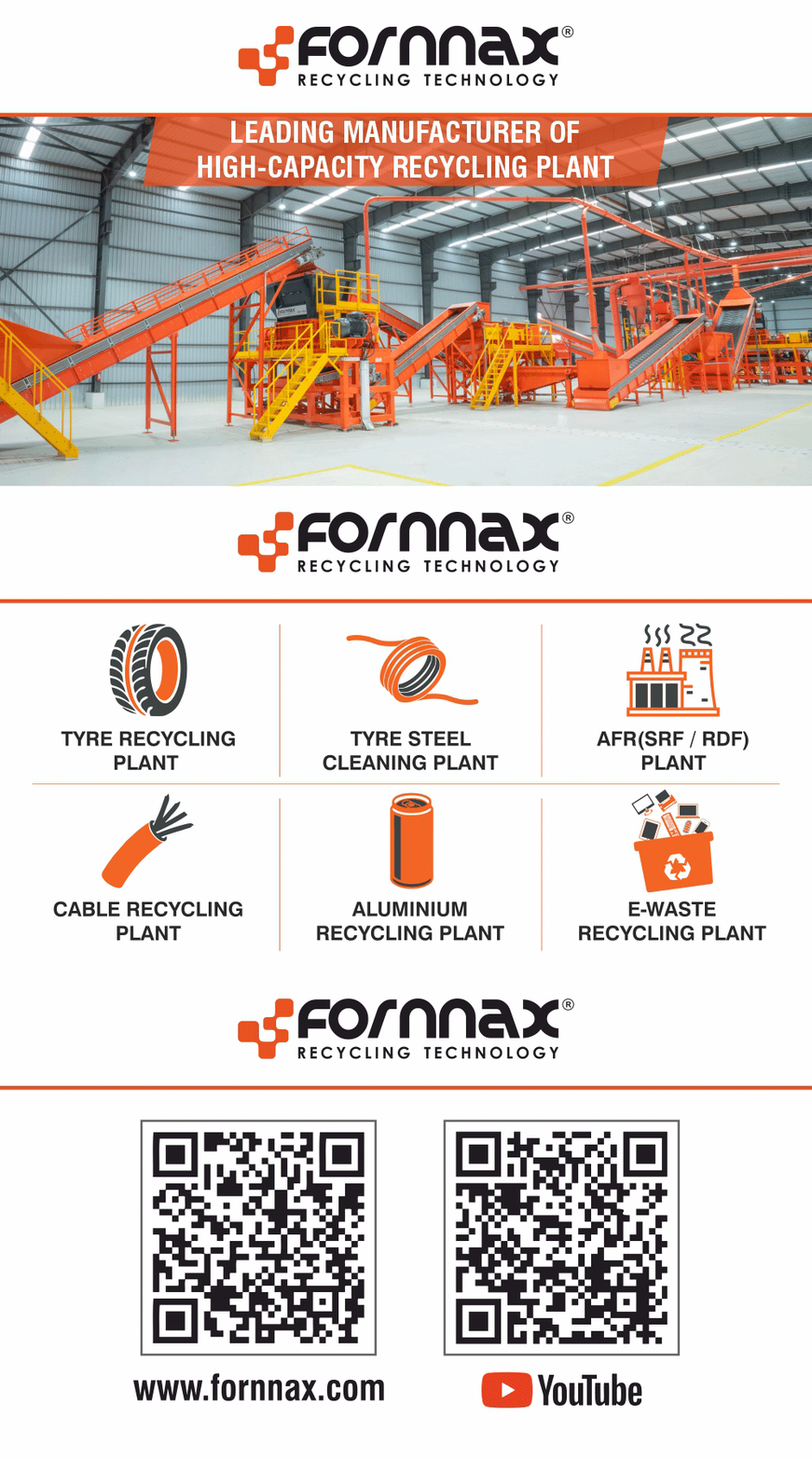
“With over two decades of expertise, Mr. Dieter Jerschl joins FORNNAX as a regional partner to accelerate sustainable recycling solutions across key European markets.” FORNNAX TECHNOLOGY, one of the leading advanced recycling equipment manufacturers, is pleased to announce its newest sales partnership in Germany as part of its strategic expansion into Central Europe. The company has entered into a collaborative agreement with Mr. Dieter Jerschl, an industry veteran with more than 20 years of experience in the shredding and recycling sector, having worked with prominent companies like BHS, Eldan, Vecoplan, and more, to represent and promote FORNNAX's solutions in the region.

February issue of Tire Recycling Insights is out

February issue of Tire Recycling Insights is out

Newsletter

February 2, 2026

Read about the most important events and updates in the tire recycling and pyrolysis industry! Subscribe for our newsletter today! Weibold offers comprehensive consulting services in the field of tire recycling and tire pyrolysis. Learn how Weibold's Market Researches can help you successfully launch and upgrade your business!

Weibold Academy: France opens a new chapter for tire pyrolysis oil in Europe

Weibold Academy: France opens a new chapter for tire pyrolysis oil in Europe

pyrolysis

January 31, 2026

For more than a decade, the European tire pyrolysis sector has lived with a paradox. Technically, pyrolysis (or pyrolysis) of end-of-life tires (ELTs) has demonstrated its ability to recover valuable hydrocarbons and return them to the chemical value chain. Legally, however, the main product – tire pyrolysis oil (TPO) – often remained burdened with the classification of “waste,” even when it was demonstrably used as a substitute for fossil feedstocks in petrochemical applications. This legal ambiguity has been one of the central barriers to industrial scale-up, financing, and long-term offtake agreements.